
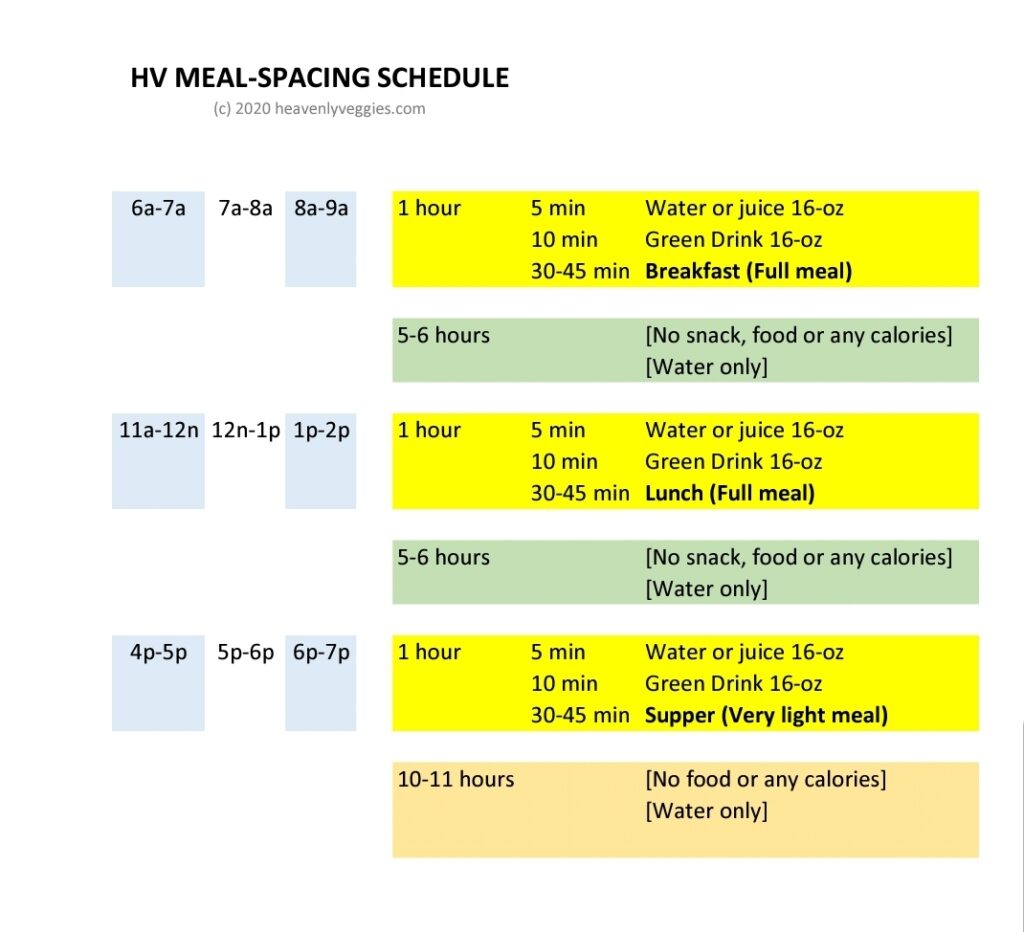
Role of meal-spacing in gut health and auto-immunity
Meal-spacing is an important factor in healthy gastrointestinal function. It provides needed time space between meals where a series of special “house-keeping” waves (called the migrating motor complex, MMC) sweep through the stomach and small intestines at about 1-2 hours after finishing your meal and in the interval where there is no intake of food.
The MMC waves are important in preventing small intestinal bacterial overgrowth (SIBO), preventing dysbiosis (imbalance between friendly and unfriendly bacteria in the gut), and preventing leaky-gut syndrome.
The MMC waves are absent during active food intake. Snacking or any calorie intake interferes with normal MMC function. It is important to have a complete break from food intake to allow the MMC to work and complete its cycle, which lasts 2 to 4 hours between meals.
Many auto-immune diseases are associated with dysbiosis and leaky-gut syndrome and patients are noted with dysfunction of the MMC waves.
Meal-spacing of 5 to 6 hours (or more) between meals provide adequate space for the MMC to complete its cycle and keep the GI tract protected from bacterial overgrowth and dysbiosis.

The Gut’s Housekeeper: Optimizing Your Health with Intentional Meal Spacing
The pursuit of optimal health often focuses on what we eat, but the question of when we eat is just as vital. Constant grazing, a modern habit, can disrupt a critical internal cleansing process, leading to digestive issues that can affect whole-body wellness.
This is where intentional meal spacing comes in. By giving your gut scheduled breaks, you activate your body’s innate housekeeping mechanism: the Migrating Motor Complex (MMC).
What is the Migrating Motor Complex (MMC)?
The Migrating Motor Complex (MMC) is a cyclic, wave-like pattern of electrical and motor activity that sweeps through the stomach and small intestine. Think of it as your digestive system’s self-cleaning cycle—a biological “housekeeper” that works diligently only when you’re not eating.
The MMC’s Crucial Cleansing Role
The MMC serves three essential functions during the fasting state:
- Sweeping Debris: It pushes undigested food particles, sloughed-off cells, and mucus along the entire length of the small intestine and into the colon.
- Bacterial Defense: This sweeping action is crucial for preventing Small Intestinal Bacterial Overgrowth (SIBO). If the MMC is disrupted, bacteria can migrate upward from the large intestine or stagnate in the small intestine, leading to dysbiosis, bloating, pain, and malabsorption.
- Preventing Dysbiosis and Leaky Gut: By keeping the small intestine clean and reducing bacterial overgrowth, the MMC helps maintain a healthy microbial balance (preventing dysbiosis) and supports the integrity of the intestinal lining, which is essential for protecting against hyper-permeability, often referred to as “leaky gut” syndrome. Research consistently links a dysfunctional MMC to gastrointestinal disorders like SIBO and IBS.
The Science of Spacing: When Does the MMC Start?
The most important rule of the MMC is simple: It only works when you are in a fasted state.
The MMC is a sophisticated mechanism regulated by hormones like motilin, and it is immediately shut down upon the consumption of calories. Even a small snack, or any caloric beverage, signals the body to switch from “cleaning mode” to “digestion mode.”
A single cycle of the MMC (Phase III, the most active sweeping phase) typically takes between 90 minutes and 3.5 hours to complete its work. Given that the MMC usually begins its cycle about 1 to 2 hours after your last bite of food has been digested, this gives us a science-backed window for meal spacing.
Your Optimal Meal Spacing Schedule
To allow your MMC to run a full, effective cycle, the scientific recommendation is to schedule deliberate breaks between all caloric intake:
| Timing Window | Recommendation | Purpose |
|---|---|---|
| Inter-Meal Spacing | 5–6 hours between meals and snacks | Allows the MMC to complete at least one full sweep of the small intestine. Aim for no caloric intake—only water preferrably. |
| Overnight Spacing | 12–16 hours overnight | This is the longest, most uninterrupted fasting window, which maximizes the body’s time for comprehensive gut cleansing, repair, and rest. |
By prioritizing a minimum of 5 hours between meals, you transition from a state of constant digestion to cyclical cleansing, providing your gut with the downtime it desperately needs to maintain internal order.
Key takeaway: Intentional meal spacing is not about calorie restriction; it is about respecting the biological mechanisms your body uses to protect itself from infection and maintain digestive efficiency.
Bibliography
- MMC Control & Role: Deloose E, Tack J. The migrating motor complex: control mechanisms and its role in health and disease. Nat Rev Gastroenterol Hepatol. 2012;9(5):271-280. doi:10.1038/nrgastro.2012.57.
- MMC Disruption by Food: Vantrappen G, Janssens J, Hellemans J, Ghoos K. The interdigestive motor complex of the human stomach and small intestine. Mechanisms and significance. Gastroenterology. 1977;73(4 Pt 2):861-862.
- MMC Dysfunction and SIBO: Pimentel M, Morales W, Chow EJ, et al. Low levels of migrating motor complex activity in the duodenum of patients with irritable bowel syndrome. Am J Physiol Gastrointest Liver Physiol. 2002;283(5):G998-G1003.
- SIBO and Pathophysiology: Dukowicz AC, Lacy BE, Levine GM. Small intestinal bacterial overgrowth: a comprehensive review. Gastroenterol Hepatol (N Y). 2007;3(2):112-122.